Codebase Orientation for Non-Engineering Roles
Non-engineers need trusted codebase access without learning to code.
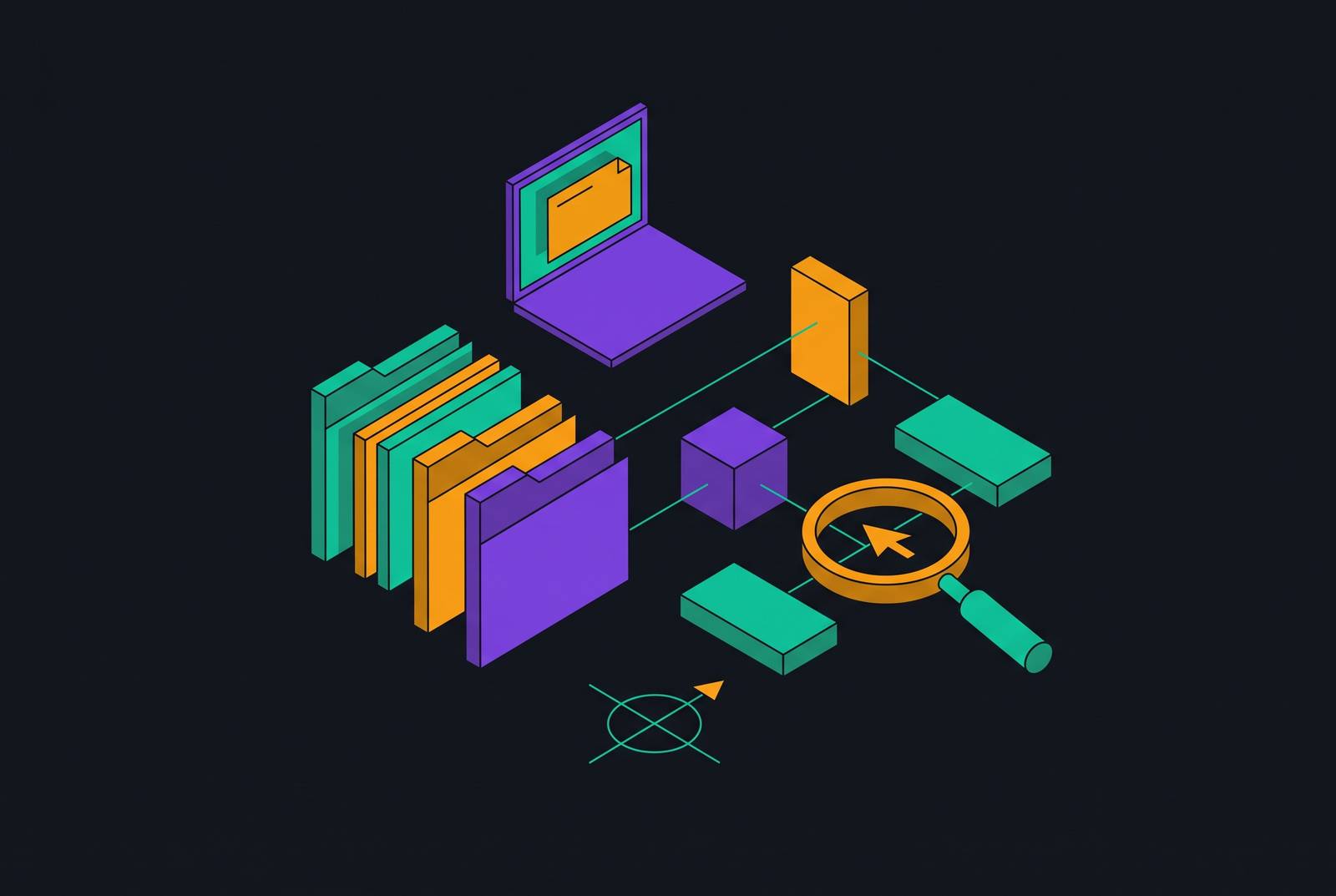
Codebase orientation gives people in non-engineering roles a way to get answers they can trust when they need them, without having to learn to read code. Faster engineering onboarding depends on the same foundation, which is a current, whole-codebase index with architecture, business vocabulary, and ownership context that people and AI agents can query. The infrastructure behind that access determines how quickly PMs, support staff, and new hires become useful without interrupting engineers.
Why non-engineers keep interrupting engineers to understand the codebase
A Slack DM arrives with a “quick question” about a feature, and a senior engineer spends 20 minutes explaining how it works. A PM needs to know what would break if it changed. A support agent needs to distinguish a bug from expected behavior. A new hire needs to find the part of the system responsible. Each question is reasonable, but each makes an engineer the interface to information that already exists.
The codebase is the authoritative record of how the product works, but it has historically been legible only to people who write code. Other roles therefore route their questions through someone who can interpret it. As teams grow, this interrupt load compounds, taking time away from design, review, and delivery. The missing capability is a self-service way to consult the codebase.
What has actually changed: non-engineers are already touching production codebases
Superhuman uses Codex to let PMs contribute lightweight code changes without involving an engineer until code review. Stripe ships over a thousand PRs produced by agents per week. Access to the codebase is no longer confined to the traditional sequence of an engineer reading, interpreting, and changing code manually.
The hiring requirements for Dealpath’s Senior Product Manager, AI role spell out this change. It calls for “vibe-coding proof of concepts” and “rapid AI prototyping for early user testing”. Those requirements belong to a PM role. They extend product work beyond describing a proposed feature to producing something that can be tested.
The cases show that querying, navigating, and acting on a codebase no longer requires every participant to read it line by line. Some organizations have thus decided to give non-engineers access and are now working out how it should work. Orientation now means giving people a reliable route from a product question to a codebase-grounded answer.
What makes an AI agent's answer about the codebase reliable or useless
Epilot’s setup makes the central distinction concrete. Its indexed knowledge base, “how-to-everything”, contains API patterns, backend conventions, CI/CD and testing strategy, business context, domain terminology, and the full RFC archive. Agents without this context “produce garbage”, while agents with it produce work that “feels native”. Agents need both capability and the information required to work within this particular system.
Without that context, an agent can produce a confident account of how a feature usually works in similar software. Such an answer may be structurally plausible while being wrong about the actual implementation. An engineer has a frame of reference for detecting that mismatch. A PM or support agent often does not, making plausible-but-wrong answers especially costly for the people the interface is supposed to help.
Specificity matters as much as volume. Epilot exposed its Volt UI component library through a dedicated MCP server so that Claude generated frontend code with the correct components, spacing, and patterns from the first try. A large collection of generic documentation would not supply those exact constraints. Useful context describes the system’s conventions as well as its contents.
The harness determines what actions an agent can take, while indexed repositories, architecture documents, business vocabulary, and data ownership inform whether those actions fit the codebase. Neither substitutes for the other. Orientation is therefore an infrastructure problem before it is a training problem, because user instruction cannot compensate for missing system knowledge.
The three-layer infrastructure that makes on-demand codebase answers possible
Reliable access rests on three stacked layers, which are a connection protocol, an accessible agent harness, and an indexed context layer. The first connects the agent to tools and data. The second provides the working interface and available actions. The third supplies the organization-specific information on which answers depend. Choosing one does not remove the need for the others.
The first layer is Model Context Protocol, or MCP. Anthropic introduced MCP in late 2024, and it was adopted broadly in 2025 and 2026 as a common interface for external tools and data sources. That connection gives agents access to the RFC or Linear ticket often needed to answer questions about why something was built. MCP lets the same governed context reach different harnesses without rebuilding it for each tool.
The second layer is the harness. Cursor provides an AI-native editor, while GitHub Copilot fits GitHub-centric workflows with its issue-to-PR cloud agent. Claude Code loads CLAUDE.md on its own at each session, and Cursor uses.cursor/rules/*.mdc files to set which instructions apply to which file types. Intercom’s more than 300 non-engineers using Claude Code weekly illustrate why teams need an interface that does not make a local development environment the entry requirement.
The third layer is a current index spanning the whole codebase and its business context. Sourcebot provides a self-hosted option that lets people and agents search across an organization’s repositories through natural language or MCP-based access. The index needs to span repositories because questions about who owns code, what a change affects, and why decisions were made can involve more than one repository. Epilot’s knowledge base shows what context needs to come with the code, including domain terminology and architecture conventions. A stale or partial index can still produce confident answers from incomplete information, so coverage and freshness are core requirements.
Why data residency requirements make the context layer an infrastructure decision, not a tool decision
The exposure risk starts with the information sent to an agent. A question about a feature can carry proprietary logic, architecture details, or business-sensitive implementation into the model’s context. Non-engineers may not recognize what they are disclosing when they paste that material into a prompt. When an organization’s residency or confidentiality rules forbid sending that information out, how easy an interface is to use cannot decide the architecture.
GitHub announced a training data policy change in March 2026, effective April 2026, under which Free, Pro, and Pro+ users’ interaction data could be used for training. GitGuardian’s most recent data also shows AI-assisted commits leaking secrets at roughly double the baseline rate. Secret leakage and context transmission are different risks, but both make the handling of sensitive code part of the infrastructure decision.
Keeping both the context layer and inference inside the organization’s network keeps that context from being sent outside it. A self-hosted index that uses cloud inference carries a different risk because context still goes to the model endpoint. Teams therefore need to control which LLM provider gets their code and under what terms.
For the context layer, Sourcebot can run inside company infrastructure through Docker Compose, with its application container, Postgres, and Redis. Its MCP-based connectors can bring in context from tools including Jira, Slack, and Linear. The deployment still has operational requirements, so teams comparing “self-hosted versus cloud” need to evaluate the actual stack they must run. The inference choice must then match the same security boundary.
What non-engineers actually need to be able to do, and what orientation gets them there
Intercom gave Claude Code to over 1,000 non-engineers, including PMs, designers, support staff, and marketers. Those roles do not share a single definition of useful access. Their questions differ, so orientation succeeds at the level of the work each person needs to complete. The same infrastructure must help people do different jobs without requiring them all to learn the same way of reading code.
For PMs, the primary outcome is understanding what would be expensive or risky to change. That understanding supports better specifications, stronger scope discussions, and a clearer handoff to engineering. Dealpath’s prototyping requirements point toward a further capability, in which PMs build and query prototypes themselves and shorten the specification-to-feedback loop from days to hours. Spec-driven development puts a premium on this knowledge because the requirements document must account for what the codebase already contains. An oriented PM can establish what a feature actually does and what a change could break without first asking an engineer.
For support and customer success, the task is distinguishing a bug from a known limitation or expected behavior. Epilot added Claude to its #alerts-production channel on day two, where it investigated incidents, read logs, traced errors, and proposed fixes before most engineers opened the dashboard. The orientation goal is a support agent who can identify a complaint’s probable code location and characterize its blast radius before escalating.
For new hires, the first task is building a mental model of the system, its domain vocabulary, and its ownership boundaries. A well-indexed codebase with business context can reduce that initial orientation phase from weeks to hours, although judgment about the answers still takes time. Epilot’s knowledge base illustrates how the same artifact can serve human questions and agent context. This also helps new engineers find their way around a large codebase they do not know, though they still need more than that to be ready for engineering work.
What engineering teams need to build, buy, or configure to make this work
Teams start with three linked decisions: what to index, how people will get access, and who will keep the context accurate. That order matters because an easy-to-use interface cannot fill holes in the index, and an index that covers more code cannot fix context that is wrong. Engineering teams need to establish what the agent can know before deciding how people will reach it. Governance then keeps that knowledge useful as the system changes.
The first decision is to cover the whole codebase rather than a curated subset of familiar repositories. Epilot built a developer sandbox from a single GitHub repository that bootstrapped shallow copies of all 219 repositories, with tools ready within minutes. That approach required engineering investment. Teams without the bandwidth to build an equivalent environment can instead choose a platform that indexes the organization’s repositories and keeps the index current.
The second decision is to put access where non-engineers already work. Running agents in Slack did more than anything else to get people at Epilot to use them. A Slack interface, web interface, or natural-language query surface avoids making an engineering workstation a prerequisite. Non-engineers who make changes also need preview environments on every PR. Without a way to see and interact with a change, they cannot meaningfully evaluate the agent’s output.
The third decision is to put engineering in charge of keeping context accurate. Teams need to take as much care with business vocabulary, data ownership, and architecture decisions as they do with product documentation. Non-engineers can tell when answers help them, but they cannot reliably tell whether the context behind those answers is technically correct. MCP then allows this governed layer to serve multiple harnesses as tools change.
Teams can start without rebuilding Epilot’s entire environment. First, deploy a self-hosted index of the full codebase, then connect it to the existing harness through MCP and add business context incrementally. For teams taking that route, Sourcebot’s free tier allows real repositories to be indexed before a purchase decision. Success combines tool adoption with fewer “quick questions” routed through engineers, faster answers for PMs and support, and a reduction in new hires’ orientation time from weeks to hours.